PART 2: What Was Written on the Church Chalkboard
Standing inside that silent dining room, watching steam rise from four untouched bowls of soup, was the most unnatural thing I have ever experienced.
"Daniel, we need to get out of here," my friend whispered from the doorway, his hand gripping the doorframe so hard his knuckles turned white. "Look at the stove. The burner is still on."
He was right. Whoever lived here hadn't packed a bag or planned a trip. They had stood up in the middle of dinner and walked out into the freezing night without even grabbing their winter coats off the hooks by the door.
We stepped back onto the empty street. The entire valley was dead silent—no wind, no traffic, not even the sound of birds in the pine trees.
Then, from the top of the hill at the end of the street, the heavy iron bell of the old wooden church rang out once.
CLANG.
The sound echoed across the valley and died instantly.
Without speaking a word, both of us started walking up the icy hill toward the church. The heavy oak doors were unlocked, and a single dim bulb was flickering above the entrance.
When we pushed the doors open, the sanctuary was completely empty. The wooden pews were bare, and the air smelled strongly of damp earth and old candle wax.
At the front of the room, standing next to the pulpit, was a large black chalkboard—the kind small country churches use to list Sunday hymn numbers.
There were no hymn numbers written on it.
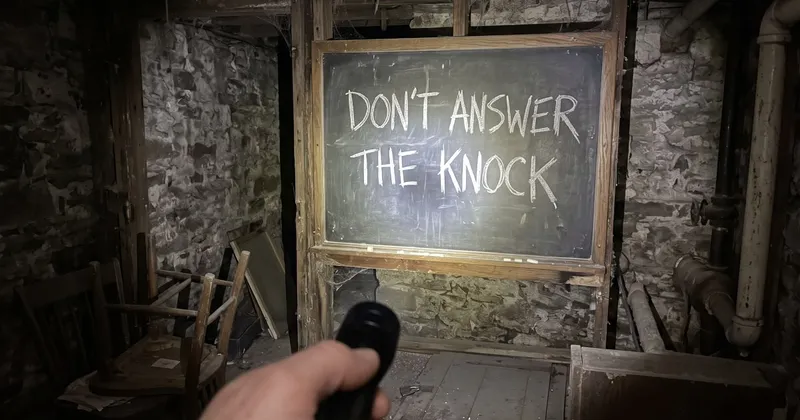
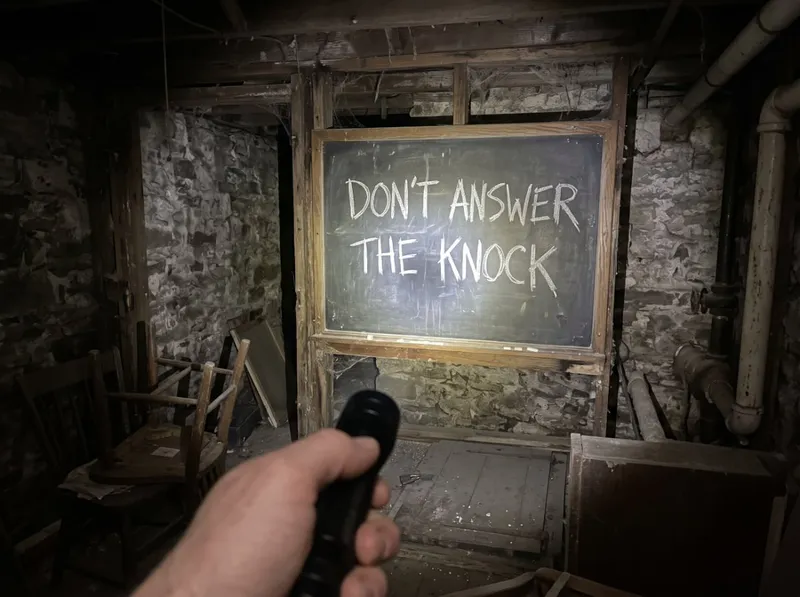
Instead, across the center of the board, someone had written four words in thick white chalk, the letters sloping downward as if written in extreme panic:
"DON'T ANSWER THE KNOCK."
Before either of us could take another breath, three slow, heavy knocks echoed from directly beneath the wooden floorboards under our feet—coming from the locked cellar door behind the pulpit.
We didn't wait to see who or what was down there. We sprinted out of the church, jumped into our car, and drove ninety miles an hour back toward the main highway without looking in the rearview mirror once.
When we tried to find that gravel turnoff on the map the next morning at the state police station, the trooper stared at our dashboard GPS coordinates in complete silence—and told us that town had been flooded to build a reservoir in 1968.