A Father Asked His Wife to Give Up Their Newborn Daughter With Down Syndrome – Her Response Came With One Condition
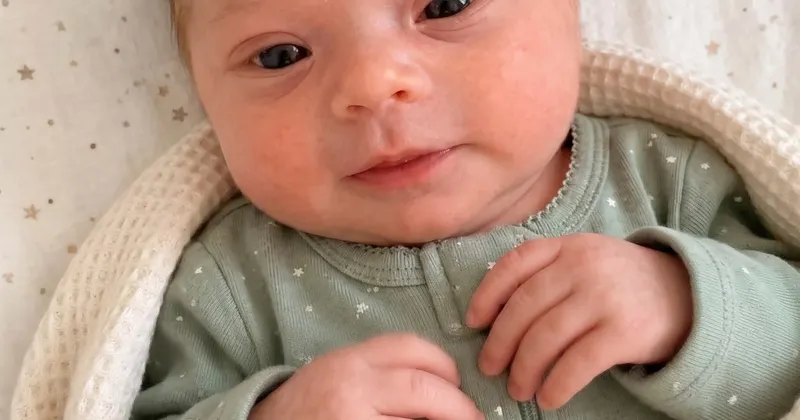
The first thing my husband did after our daughter was born was take photographs. Not just one or two pictures to remember the moment. He adjusted the blanket, moved closer to the window, checked the lighting, and took another photograph whenever he thought he had found a better angle.
He wanted everything to look perfect.
Our daughter, Nora, had other plans.
Every time he carefully straightened her little blanket, she moved one leg, curled her fingers, or turned her head, making the fabric wrinkle again.
“There we go,” Grant whispered, smoothing the corner for the third time.
I watched him and managed a tired smile.
“She’s not going to cooperate with your photography instructions.”
He laughed briefly and lifted his phone again.
I was sitting in the hospital bed, still exhausted from delivery, holding the tiny person I had spent months imagining.
Nora’s cheek rested against my chest. Her breathing was soft, and one of her hands had found my finger.
I didn’t want another photograph.
I wanted another minute with my daughter.
“Would you like to hold her again?” I asked Grant.
He looked at the phone.
“Let me tell everyone she’s here first.”
I nodded, although something about his answer made me wish he had put the phone down.
There were so many people waiting for news.
My sister wanted a picture. My mother wanted to know whether Nora had my nose. Friends had already sent congratulations.
Everyone was excited.
And I was still trying to understand how someone so small could suddenly become the center of my entire world.
I had no idea that, within days, the happiness in that hospital room would be replaced by a conversation I would remember for the rest of my life.
A few hours later, the pediatrician came into our room.
She pulled a chair closer and asked how Nora was doing.
I explained that feeding had been more difficult than I expected. The nurse had already helped me try different positions, but we were still learning what worked best.
Grant stood near the window, holding his phone.
The doctor listened carefully before explaining that she had noticed some physical characteristics that could be associated with Down syndrome.
She recommended chromosome testing to clarify what she was seeing.
I remember looking down at Nora.
She was sleeping peacefully against me.
“Does that mean something is hurting her?” I asked.
The doctor explained that Down syndrome itself isn’t a painful condition, and that Nora’s individual health and support needs would be assessed.
She also explained that the medical team would help us understand the feeding difficulties and arrange appropriate follow-up care.
I listened.
At least, I tried to.
There were unfamiliar words, new information, and questions I didn’t even know how to formulate.
I asked the doctor to repeat several things.
Grant stepped forward.
“But you’re not completely certain yet, correct?”
The doctor explained that the testing would provide clearer information.
He nodded.
I thought we were both frightened.
I thought we were both wondering what the future might look like.
Most importantly, I thought we both wanted to understand how to give our daughter the best possible care.
I was wrong about something.
I just didn’t know what yet.
That evening, I was choosing a photograph to send my sister when Grant asked me to stop.
“Why?” I asked.
He was standing beside the small table, twisting the lid of his coffee cup.
“Until we know what’s happening.”
I looked at him.
“We already know the doctor is doing tests.”
“That’s not what I mean.”
He paused before continuing.
“You could have waited before telling everybody.”
I glanced at the photograph on my phone.
Nora was resting against my hand, her little cheek pressed against my thumb.
I didn’t understand why sharing that picture suddenly seemed like a problem.
“My sister is excited to meet her niece.”
Grant didn’t answer.
Instead, he wiped a tiny coffee stain from his sleeve.
I knew that gesture.
He had always been particular about appearances.
When we attended company events, he wanted everything to be arranged properly. He checked his clothes before leaving the house and disliked anything that might attract unwanted attention.
Once, during my pregnancy, I had put on a green dress for one of his work dinners.
He looked at me, checked his watch, and said something I never forgot.
“You look huge in that.”
I was four months pregnant.
I laughed because I didn’t know what else to do.
He found another dress in my closet, something darker and less noticeable.
I changed.
Later, he complimented me in front of his colleagues.
For a long time, I accepted those moments as ordinary marriage disagreements.
I told myself he was simply particular.
But now, sitting in a hospital room with our newborn daughter, I was beginning to recognize a pattern I had spent years overlooking.
I sent the photograph to my sister anyway.
Grant watched the screen.
He said nothing.
The following day, feeding Nora became my main priority.
The nurse helped me adjust the pillows and showed me another position.
We took our time.
Sometimes Nora needed more patience than I expected. Sometimes I needed the nurse to demonstrate something again.
I stopped checking the clock.
I stopped worrying about whether I was doing everything perfectly.
I concentrated on the little girl in my arms.
Grant, meanwhile, continued stepping into the hallway to answer calls.
Whenever the pediatrician came by, he asked similar questions.
Could the initial observations mean something else?
When would we receive the results?
What would happen next?
I understood his need for answers.
I needed them too.
But something was missing.
He never asked the nurse what he could do to help with feeding.
He never asked what I had learned during the previous session.
And he rarely asked how I was feeling.
My sister noticed before I said anything.
That afternoon, she arrived with clean pajamas, sandwiches, and a small stuffed rabbit our mother had bought for Nora’s nursery.
She sat beside my bed and opened the food.
“What do you need?” she asked.
I looked at her.
For a moment, I couldn’t answer.
I needed sleep.
I needed a shower.
I needed somebody to tell me that it was normal to feel overwhelmed.
But more than anything, I needed to know that I wasn’t going to face everything alone.
She handed me a sandwich.
“Eat something first.”
I smiled weakly.
It was such a small gesture.
Yet it was the first time that day somebody had asked what I needed instead of telling me what I should do.
Before leaving, she placed the little rabbit beside my hospital bag.
I picked it up and examined its soft ears.
It didn’t match the carefully selected colors Grant had chosen for Nora’s nursery.
He had moved it during one of his attempts to arrange the room.
I had quietly put it back.
Now I tucked it into my bag.
There was another thing in that nursery I hadn’t forgotten.
An envelope.
Grant had written Nora’s name on the front and added a date eighteen years in the future.
He told me it was a letter for her birthday.
I had been delighted.
I imagined him writing about her first steps, her first day at school, and all the ordinary memories parents hope to collect.
He hadn’t let me read it.
At the time, I thought it was sweet.
Now I wondered what he had written.
The next morning, the pediatrician returned with the test results.
She sat down and explained that the rapid chromosome test confirmed Down syndrome.
A fuller chromosome report would follow, and Nora would continue receiving the recommended assessments and follow-up care.
I held my daughter a little closer.
The doctor discussed health checks, support services, feeding assistance, and the next appointments.
I asked her to write down the most important information.
I didn’t want to forget anything.
Grant stood near the window.
He was unusually quiet.
When the doctor finished, she asked whether we had additional questions.
He shook his head.
I waited until the door closed.
Then I looked at him.
“Could you bring me the folder she left?”
He didn’t move.
Instead, he approached the bed and pulled the visitor’s chair closer.
“Liv, we need to talk.”
I looked down at Nora.
She was moving her mouth against my sleeve.
“What is it?”
Grant took a breath.
“Maybe we shouldn’t take her home.”
For a moment, I thought I had misunderstood him.
I assumed he meant the medical team wanted Nora to stay longer.
“Did the doctor say something about her needing more care?”
He shook his head.
“No. I’m talking about adoption.”
My hand stopped moving.
He continued before I could respond.
“There are families who would adopt a child like her.”
I looked at him.
Then I looked at our daughter.
Her name was Nora.
She was our daughter.
She wasn’t a problem waiting to be transferred to somebody else.
“Why are you talking about her like she’s a mistake?” I asked.
Grant loosened his tie.
“Think about my career.”
I waited.
He looked toward the door.
“People will notice. They’ll ask questions. They’ll whisper about us.”
I couldn’t believe what I was hearing.
“She’s our baby.”
“I know that, Liv.”
“Then why are you talking about giving her away?”
He made a frustrated gesture.
“You aren’t considering the bigger picture.”
I reached for the call button.
“Please leave.”
He stood and adjusted his tie.
“We’ll talk when you’ve rested.”
Then he walked out.
I sat there for a long time.
I wanted to cry, but I couldn’t even find the words to explain what had happened.
I had spent the previous days worrying about our daughter’s health and learning how to care for her.
Now I was trying to understand how the man who had once written her a birthday letter could suggest that we pretend she didn’t belong in our family.
The next morning, Grant returned.
He wasn’t alone.
A lawyer accompanied him, carrying a leather folder.
I recognized the man from one of Grant’s company dinners.
He introduced himself and explained that he represented my husband.
He also clarified that the documents were preliminary and that adoption would involve a separate legal process and independent advice.
Grant barely seemed interested in that explanation.
He moved my water glass and placed the papers on the bedside table.
“He can handle everything quickly,” he said.
I looked at the documents.
My daughter was sleeping beside me.
Her little hand was resting near the edge of the blanket.
Grant reached for a pen.
“We’ve discussed the options.”
I didn’t answer.
He leaned closer.
“We can just have another baby.”
That sentence changed something inside me.
Until then, some part of me had been hoping he would recognize how cruel his suggestion was.
I thought perhaps he was frightened.
Perhaps he needed time.
Perhaps the pressure of unexpected medical information had overwhelmed him.
But now he was speaking as though Nora could simply be replaced.
I set down the bottle I had been holding.
Then I looked at him.
“Fine.”
His expression changed immediately.
“You agree?”
I kept my voice calm.
“On one condition.”
He straightened in his chair.
“What condition?”
I glanced toward the lawyer.
Then I asked the question that mattered.
“What would we tell our family?”
Grant seemed relieved.
“There were complications during delivery.”
I waited.
He continued.
“We’ll say the baby didn’t survive.”
For a moment, the room became completely silent.
I looked down at Nora.
She sneezed softly against my gown.
I wiped her nose with the corner of her cloth.
Then I looked back at my husband.
“You want me to tell my mother that her granddaughter died?”
Grant spread his hands.
“People will feel sorry for us, then move on.”
The lawyer closed his folder.
“I won’t help misrepresent what happened to this child.”
Grant turned toward him.
I didn’t let the conversation move away from the point.
“May I have a blank sheet of paper?”
The lawyer hesitated before taking one from his folder.
I placed it in front of Grant.
His pen was still uncapped.
“Write Nora a letter.”
He looked confused.
“What?”
“Explain why you don’t want to be her father.”
His expression changed.
I continued.
“Tell her why you decided that what other people might think was more important than bringing your own daughter home.”
He glanced at the lawyer.
Then he looked at Nora.
“She’s a baby, Liv.”
I adjusted her position against my arm.
“She won’t always be.”
He lowered the pen.
For several seconds, I watched him hold it above the paper.
He had plenty to say when Nora was too young to understand.
He had explained adoption.
He had discussed appearances.
He had suggested telling my mother that her granddaughter had died.
But now, when asked to put his reasoning into words, he couldn’t begin.
Eventually, he placed the pen on the table.
I pushed the adoption documents back toward the lawyer.
“I’m not signing anything.”
Grant stared at me.
“You said you agreed.”
“I wanted you to hear what you were asking me to do.”
He opened his mouth.
I continued before he could interrupt.
“I was never going to sign.”
Then I looked directly at him.
“Nora is coming home with me.”
I asked both men to leave.
The first person I called was my sister.
She answered quickly.
I told her everything.
I explained the adoption papers, the conversation about my mother’s reaction, and the blank page I had placed in front of Grant.
She didn’t ask whether I had misunderstood.
She didn’t tell me to calm down.
She simply listened.
When I finished, she said something I desperately needed to hear.
“My spare room is ready.”
I closed my eyes.
For the first time since the conversation began, I felt that I might be able to breathe normally again.
A hospital social worker helped me identify support resources and discuss practical arrangements.
I also decided to obtain independent legal advice rather than rely on anything Grant’s lawyer had explained.
I spoke with the nursing staff about Nora’s discharge plan and made sure I understood the follow-up appointments and feeding guidance.
There were many things to arrange.
But I was no longer trying to convince myself that everything was normal.
I knew what had happened.
And I knew I needed support.
That afternoon, Grant asked whether he could visit.
I agreed to a short visit.
He arrived carrying the envelope from Nora’s nursery.
I recognized her name immediately.
“I went home,” he said, placing it beside my bag.
“I thought you should have this.”
I opened the envelope.
Inside was a letter.
It contained promises about birthdays, school, and scraped knees.
He had written about teaching Nora to ride a bicycle and being there when she needed advice.
Then I reached a sentence that made me stop.
“Whatever happens, I’ll always be in your corner.”
I read it again.
Then I looked at him.
“What changed?”
He looked toward the bassinet.
“Nothing about her.”
I folded the letter carefully.
“Then why did you ask me to give her away?”
He sat down.
For a moment, he didn’t answer.
Then he said something I hadn’t expected.
“I wanted you to make it easier for me, Liv.”
I looked at him.
He continued.
“I was worried about what people would think.”
I didn’t rescue him from the silence.
I didn’t tell him that everything would be all right.
I didn’t make excuses for him.
He eventually apologized.
I listened.
But an apology wasn’t going to erase the conversation we had just experienced.
Before leaving, he asked whether he could hold Nora.
I looked at him for a moment.
Then I asked the nurse to help him position himself comfortably.
He washed his hands and sat down.
I placed Nora in his arms.
Her blanket slipped slightly as she moved.
This time, he didn’t straighten it.
He simply looked at her.
After a while, he asked about feeding.
I called the nurse.
She explained what we had been practicing and showed him how he could help.
Grant listened.
He asked questions.
I watched without calling it a fresh start.
A father holding his daughter was a moment worth remembering.
But it didn’t change what he had said when he believed she might affect his reputation.
Both things could be true.
Before leaving, Grant noticed the blank sheet of paper on the table.
“May I use that?”
I moved it toward him.
He took a pen from his jacket.
This time, he began writing.
He crossed out a sentence and started again.
When he finished, he handed the paper to me.
I read it silently.
“I was ashamed of what people might think.”
Below that, he had written:
“There was nothing shameful about you.”
The letter was short.
It contained no promises about the future.
There were no dramatic declarations.
I folded it separately from the birthday letter.
For now, I was keeping both.
“This doesn’t mean I’m coming home,” I told him.
He nodded.
“I understand.”
I couldn’t know whether he truly understood.
And I wasn’t going to make that decision in a hospital room while recovering from childbirth and learning how to care for a newborn.
There would be time for difficult conversations later.
There would also be time for decisions.
For now, my daughter needed me.
The following morning, Grant asked whether he could attend Nora’s discharge teaching.
I agreed after discussing the arrangement with the nurse.
My sister sat beside me while we listened.
The nurse reviewed the feeding guidance, follow-up appointments, and the information we needed to take home.
Grant wrote everything down.
When he missed something, he asked her to repeat it.
This time, his questions were about Nora’s care.
He also asked the social worker about counseling resources.
I didn’t make the call for him.
I didn’t arrange his appointments or reassure him that he was becoming a different person.
Those were responsibilities he needed to take seriously himself.
Eventually, the discharge arrangements were completed.
Nora was four days old.
My sister drove us to her house.
Grant followed with the rest of our bags.
He carried them inside and placed them near the spare room.
The room wasn’t perfect.
There were no carefully coordinated decorations or expensive nursery accessories.
There was a clean bed, a drawer for Nora’s clothes, fresh towels, and enough space for the little things we needed.
It felt peaceful.
Grant stood near the doorway.
“Can I come tomorrow?”
I looked at the appointment sheet in my hand.
“Call first. We’ll arrange a time.”
He nodded.
He seemed ready to say something else, but eventually stepped outside.
My sister began clearing another drawer.
She didn’t offer predictions about my marriage.
She didn’t tell me what Grant would do next.
She simply made space for us.
Then she brought me something to eat.
I sat beside Nora’s bassinet and finished my sandwich while she slept.
It was an ordinary afternoon.
And after everything that had happened, ordinary felt like a gift.
Over the following days, there were still difficult moments.
Nora needed regular care, feeding support, and follow-up appointments.
I had questions.
Sometimes I felt confident.
Sometimes I felt exhausted.
I was learning to accept help rather than pretending I could manage everything alone.
My sister became part of our daily routine.
The nurses and other professionals helped me understand the information we had been given.
I also continued arranging independent legal advice so that I could make informed decisions about my marriage and my daughter’s future.
Grant sent a message confirming that he had contacted a counselor.
I read it.
I didn’t immediately respond.
It was a positive step, but I understood that one message couldn’t repair everything.
Trust would require more than a few sentences written on a piece of paper.
It would require consistent actions.
He would have to show that Nora’s needs mattered even when nobody was watching.
And I would have to decide, in my own time, what I could and couldn’t accept.
One evening, I took the two letters from my bag.
The first was the birthday letter he had written before Nora was born.
The second was the short apology he had written after I asked him to explain himself.
I placed them beside each other.
They represented two very different moments.
One contained the future he had imagined before he knew anything about Nora’s diagnosis.
The other acknowledged the fear and shame that had influenced his behavior afterward.
I didn’t know what the future would bring.
But I knew that neither letter could make the decisions for me.
I returned them to the bag.
Then I placed the little rabbit on the dresser.
It looked slightly out of place beside the hospital folder.
I smiled.
Nora moved in her sleep, freeing one hand from the blanket.
I picked her up and settled against the pillows.
My phone lit up beside the unfinished sandwich.
It was another message from Grant.
I turned the screen facedown.
There would be time to read it later.
There would be more feeding sessions, more appointments, more questions, and more ordinary days to get through.
I looked at Nora.
Her tiny fingers curled around mine.
I remembered the hospital room, the adoption papers, and the empty sheet of paper waiting for my husband’s explanation.
I remembered how easily he had suggested that we tell everyone she had died.
And I remembered the moment I finally understood that I didn’t have to agree with his version of our family’s future.
I didn’t know whether our marriage would survive.
I didn’t know whether Grant would become the father Nora deserved.
Those answers would take time, honesty, and actions that couldn’t be replaced by promises.
But one thing was no longer uncertain.
My daughter was home.
There was no empty crib to explain.
No invented story to tell my mother.
No photograph that needed to make our family look perfect.
Just Nora, her little rabbit, a room full of clean towels, and a mother who was ready to learn everything she needed to give her daughter a loving home.
I kissed the top of her head.
She tightened her fingers around mine.
And for the first time in days, I stopped wondering what everyone else would think.
I simply stayed there with my daughter.