My Wife Walked Away After Discovering Our Newborn Son Had Down Syndrome—I Resented Her for 18 Years Until His Birthday Revealed the Truth
My wife walked away after discovering our newborn son had Down syndrome — I held resentment toward her for many years until the truth came to light on his 18th birthday.
She couldn't face our newborn son.
The doctor had just uttered the term "Down syndrome." Goldi fixated on the floor tiles.
"I can't manage this."
I assumed it was disbelief. I reassured her that we would navigate this together, one step at a time. She merely continued to shake her head.
Two days later, she initiated divorce proceedings, renounced her parental rights, packed a single suitcase, and left.
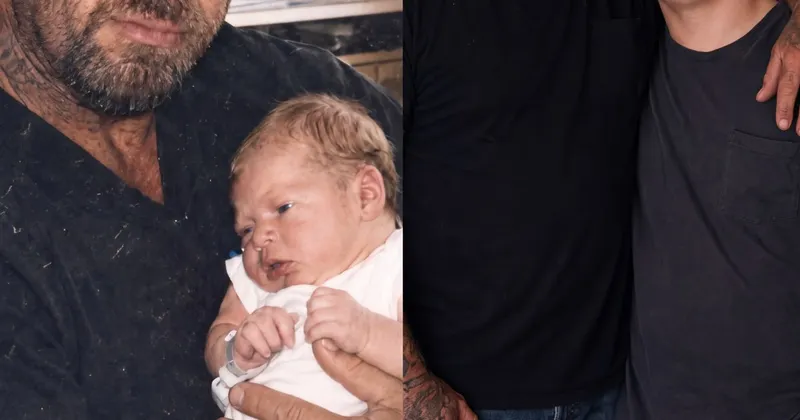
At thirty years old, I found myself in our apartment holding a three-day-old baby, questioning how a person could cease loving their own child within forty-eight hours.
That week, I purchased a Mother's Day card from the hospital gift shop. It remained in the same drawer for eleven years, never sent.
I sold my truck during the year Leo required speech therapy twice a week. Some nights, after he drifted off to sleep, I wept, fearing I wasn't sufficient.
Yet Leo never heard any of it. To him, he was the best thing that had ever happened to me.
Our neighbor, Mrs. Johnson, attended every appointment, every school performance, every small triumph. She cherished him as if he were her own grandson.
Yesterday, Leo celebrated his eighteenth birthday. Nothing extravagant — just the three of us. A homemade dinner, cake, and an excessive number of candles.
He extinguished them.
Then, he reached into his pocket and retrieved a small, yellowed letter. He slid it across the table toward me.
I chuckled. "Buddy… it's your birthday."
"I know, Dad."
He looked at Mrs. Johnson.
"She informed me that today was finally the right day."
I glanced at her. She wasn't smiling. Her teacup rattled against the saucer.
The date on the front of the envelope was eighteen years old. The handwriting was Goldi's.
Mrs. Johnson dabbed her eyes.
"Arthur… she didn’t leave because she stopped loving either of you. I made her a promise that I wouldn’t give you that letter until Leo turned eighteen."
My hands—calloused from eighteen years of double shifts at the auto repair shop and thick with fading tattoos—began to tremble so violently I could barely slide my thumb beneath the brittle paper flap.
Across the kitchen table, Leo watched me quietly, his brown eyes steady and calm, resting one hand gently over Mrs. Johnson’s wrinkled fingers as if he were the one comforting her.
"Why didn't you tell me?" I asked Mrs. Johnson, my voice barely rising above a hoarse whisper. "For eighteen years, you watched me struggle. You watched Leo ask why he didn't have a mom like the other kids at school. You held that letter the entire time?"
Mrs. Johnson let out a long, shaky breath, tears spilling freely down her cheeks.
"Because if I had given it to you back then, Arthur, you would have thrown everything away to chase after her—and Leo needed you alive, healthy, and right here," she said softly. "Read it. Please."
I unfolded the two sheets of lined notebook paper inside. The blue ink had faded slightly with age, and at the bottom of the first page, a round smudge had warped the paper—a teardrop that had dried nearly two decades ago.
"My dearest Arthur," the letter began. "By the time you read these words, our baby boy will be eighteen years old. If God has been merciful, he will be standing beside you, laughing with that bright smile I only got to hold for forty-eight hours."
My throat constricted so tightly I couldn't swallow. I had to blink hard to clear the blur from my eyes before I could read the next line.
"I know you hate me. I know you think I am a monster who looked at our son's diagnosis and walked out the door because I was too selfish to raise a child with Down syndrome. Letting you believe that is the hardest thing I have ever done—and the only way I knew how to save you both."
I stared at the words, my chest heaving as eighteen years of bitterness suddenly collided with something I couldn't comprehend.
"Three weeks before Leo was born, while you were working overtime at the garage, I went in for routine bloodwork because I had been feeling dizzy and bruised easily," Goldi had written. "Two days before my water broke, my oncologist called me into her office alone. Stage four acute myeloid leukemia. Aggressive, fast-moving, and terminal. With aggressive inpatient chemotherapy, they gave me four to six months to live—at most."
A ragged gasp tore out of my chest. I gripped the edge of the kitchen table so hard my knuckles turned white.
"When the pediatrician told us Leo had Down syndrome, I didn't stare at the floor because I didn't want him," the letter continued, the handwriting growing noticeably shakier across the page. "I stared at the floor because I knew he was going to need every ounce of your strength, every dollar you earned, and a father whose heart wasn't shattered in a hospital oncology ward watching his wife waste away."
Tears splashed onto the yellowed paper as I turned to the second sheet.
"If I had stayed, Arthur, you would have sold everything you owned to pay for my experimental treatments. You would have spent Leo's crucial first months sitting beside my hospice bed instead of holding him, teaching him to walk, and fighting for his therapies. Worse still, you would have buried me right when he needed stability most—and I knew you wouldn't survive carrying both grief and guilt at the same time. So I let you be angry at me. Anger gives a man strength. Grief destroys him."
I covered my mouth with my hand, a sob breaking free from deep inside my chest—the first time I had cried in front of my son in his entire life.
Across the table, Leo stood up silently, walked around to my chair, and wrapped his strong arms tightly around my neck, resting his chin on my gray-streaked head.
"I signed away my rights and moved into a charity hospice facility three states away so you could never find me," the final lines read. "Before I left, I entrusted Mrs. Johnson with this letter and a small savings account I had built before we married—enough to cover Leo's first year of trade school or independent living program when he turns eighteen. Tell my sweet boy that his mama loved him from the very first heartbeat, and that every single day I fought to stay alive, I was picturing the man you would raise him to become. Forgive me, Arthur. Thank you for being his whole world."
Beneath Goldi’s signature was a small postscript written in Mrs. Johnson’s neat handwriting, dated four months after Leo was born:
"She passed peacefully on November 14th, holding a photograph of you and Leo from the hospital nursery."
Silence filled the small kitchen, broken only by the hum of the refrigerator and my ragged breathing.
For eighteen years, I had locked an unsent Mother's Day card in a drawer, convinced I was protecting my son from a woman who had abandoned him. In truth, she had walked into the dark alone so that Leo and I could step into the light together.
I wiped my face with the sleeve of my black t-shirt, reached up to hold my son’s hand resting on my shoulder, and looked at Mrs. Johnson through my tears.
"Tomorrow morning," I said quietly, "we're going to the cemetery. It's time Leo finally met his mother."