



The Cat Who Refused to Leave Her Best Friend
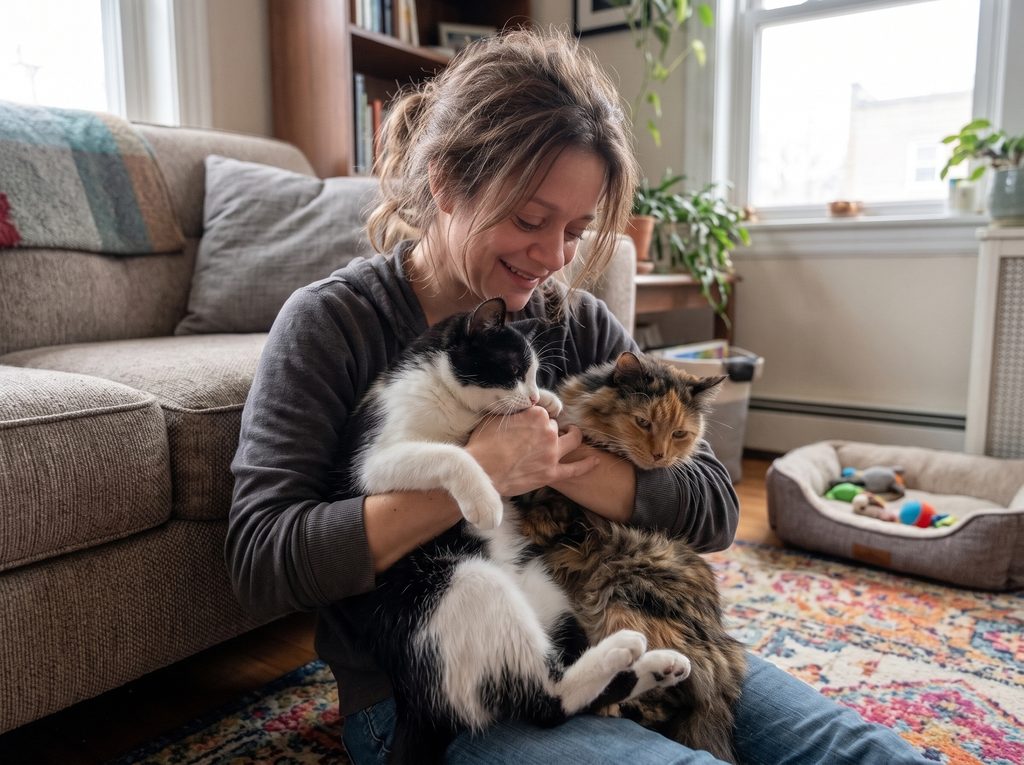
I thought I was making a simple choice at the animal shelter that Thursday afternoon. My marriage had collapsed twelve months prior, my mother had passed away shortly after, and working from home had turned my quiet house into a hollow, echoing shell. I wasn’t looking for anything fancy—just a quiet soul to share the silence with.
That was how I found Ivy.
She was a three-year-old gray shorthair with a notched left ear and a calm, watchful gaze. She didn’t beg or paw at the bars; she simply pressed her forehead against my fingers through the wire mesh. That quiet connection was enough. I signed the paperwork, paid the adoption fee, and bought a small carrier.
Waiting near the exit, I noticed Ivy kept glancing toward a far corner cage where a frail, scruffy orange cat named Bean was huddled beneath an old towel. His intake sheet noted severe malnutrition, weak hind legs, and intense trauma. He had refused to eat until the shelter moved Ivy into the adjoining pen. She would sleep pressed against the divider, groom him, and protect him from the noise of the room.
When the staff opened Ivy’s door, she stepped out toward my carrier. But then Bean let out a weak, desperate squeak.
Ivy froze. Spinning around so fast her claws skidded on the tile, she sprinted back to Bean’s pen. Standing on her hind legs, she clawed at the wire, wailing with a fury that stunned the entire room. Bean dragged himself forward until their noses touched through the mesh. When I tried to lift her away, she wriggled out of my grip and planted herself firmly in front of him.
She wasn’t running from me—she was refusing to leave him behind.
My budget was tight, my space was small, and Bean clearly required special medical care. Yet looking at them, I saw my own reflection from the day my husband packed his final box: the devastating terror of being left behind by the one presence you relied on. I couldn’t heal my loneliness by tearing theirs apart.
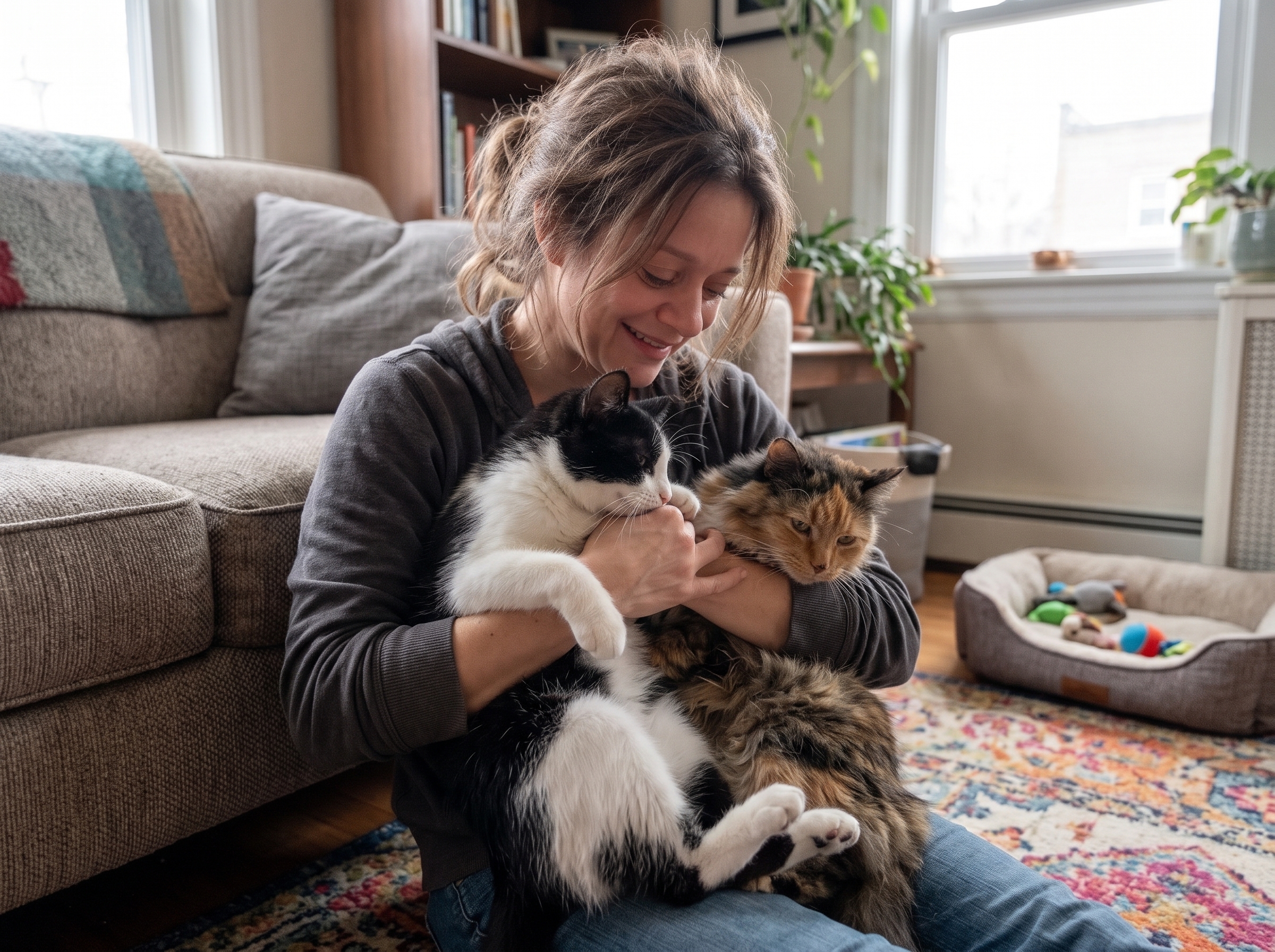
I filled out a second form. An hour later, both rode home together in a larger crate, Ivy resting a steadying gray paw across Bean’s trembling orange back the entire drive.
For weeks, Bean hid beneath the living room couch, and Ivy refused the plush bed I bought, choosing instead to sleep on the hard floor beside him. Gradually, patience wore down the fear. Bean grew stronger on homemade carpeted ramps, filled out his scruffy coat, and eventually curled beside me alongside Ivy. I believed that adopting them was the defining chapter of our healing.
I was wrong. Six months later, the past knocked on our door.
The shelter called to say an elderly man named Arthur Hale had come looking for Ivy. He had an envelope of photographs, matching veterinary files, and an ear scar that proved Ivy—whose real name was indeed Ivy—had been his late wife Helen’s companion during her long illness. When Arthur collapsed from a medical crisis and spent months in hospital rehabilitation, an overwhelmed relative had surrendered Ivy without his knowledge or consent.
When Arthur came to my house, I braced myself to defend my adoption. But the moment Ivy heard him whisper, “Hello, Ivy girl,” she didn’t hesitate—she bolted straight into his arms, burying her face into his neck while he wept silently into her fur.
Yet when Arthur stepped toward the door, Ivy pulled back, running straight to Bean and grooming his ears. The heartbreaking truth hung between us: Arthur was the family she remembered, but Bean was the life she had chosen to protect. Separating them would break Bean completely; keeping them together meant leaving a grieving widower empty-handed.
That Saturday at the shelter, prepared to hand over Ivy’s transfer papers, I brought Bean along. The moment Ivy heard his muffled cry from the lobby, she threw herself against her carrier with the exact same desperate scream from six months earlier. When the doors opened, the two cats collided, clinging to each other in an overwhelming display of devotion.
Arthur knelt on the floor, watched them for a long time, and finally laid Ivy’s old blue blanket over my hands.
“Home isn’t just the place she remembers,” Arthur whispered with tears in his eyes. “Home is where she looks when she’s afraid. Take them home.”
He gave up his claim, but neither of us let that be the end.
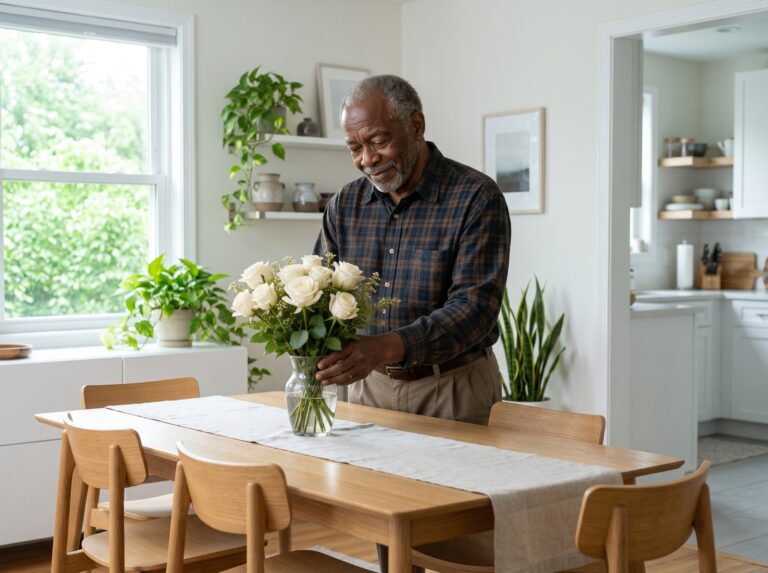
Arthur became a fixture in our lives, visiting every Wednesday afternoon. At first, he stayed an hour to share stories and fix small things around the house—reinforcing Bean’s ramps and repairing loose cabinet hinges. Over time, Bean overcame his fear and began napping across Arthur’s ankles. Even my sister Rachel began joining us for dinners, trading playful banter across the kitchen table.
Our home never turned into a neat, conventional picture of a family. It was built out of grief, secondhand furniture, and unexpected bonds. But every Wednesday, as Arthur puts on his coat and Ivy walks him to the door to rub his legs, he bends down to touch her ear and smiles at Bean waiting by the hallway.
No one has to cry at the doorway anymore. Everyone knows he’s coming back.